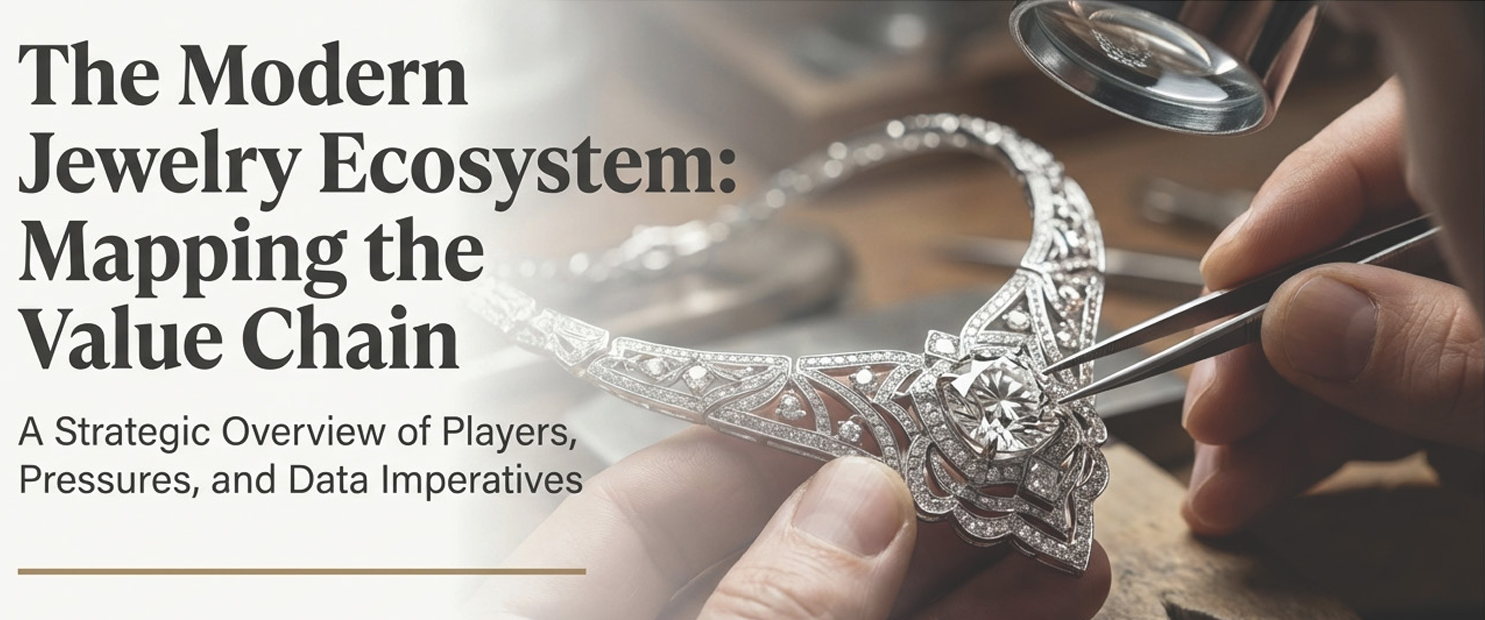
Jewelry Market Map 2025: From Mine to Omnichannel (and the Data Systems Behind It)
- Maksym Lohvinenko

- Jan 16
- 4 min read
Jewelry looks simple from the outside - until you zoom in.
Behind a single ring sits a full ecosystem: sourcing and certification, manufacturing, wholesale dynamics (including memo/consignment), retail and D2C, repairs, insurance, logistics, and an increasingly demanding customer experience across channels.
I’m validating a jewelry analytics SaaS idea, so I’m building a structured market map from research sources. NotebookLM’s Slide Decks + Data Tables made it much faster to turn that research into a shareable asset.
If you’re in jewelry ops / e-commerce and this resonates, feel free to reach out. I’m doing a few discovery conversations and would love to compare notes.The ecosystem in one page
At a high level, the value chain clusters into 4 layers:
Upstream (mining, refining, stones, labs, certification)
Manufacturing (OEM/wholesale production, custom/indie workshops)
Distribution (wholesalers, distributors, B2B portals, memo/consignment)
Downstream (retail networks, marketplaces, D2C brands, omnichannel)
Then you have the “invisible” infrastructure that keeps everything running:
insurance, logistics/3PL, appraisal/labs, compliance, payments, and customer service/repairs.

Upstream: volatility + traceability are not “nice-to-haves” anymore
Upstream sets two big constraints that cascade downstream:
1) Price volatility
Gold/diamond price moves hit COGS fast. Even if the business hedges or uses pricing rules, the operational reality is: you need clean cost inputs and consistent repricing logic.
2) Traceability and compliance
There’s rising demand for ethical sourcing and proof (certificates, lab reports, provenance). Even when the consumer message is “trust us,” the operations still need:
certificate data linked to inventory
audit trails
supplier documentation and consistency checks
Data implication: traceability is fundamentally a data model problem (linking lots/materials/certificates >> items/SKUs >> sales/returns >> repairs).
Manufacturing: lead times, wastage, and quality control drive the economics
Manufacturing constraints tend to show up as:
long lead times and planning complexity
defects / rework that quietly kill margin
metal wastage (loss during casting/polishing) that is hard to measure consistently
cash gap: paying for materials + labor long before revenue is collected
Systems you often see here (varies by size):
Jewelry ERP / production management
CAD/CAM workflows
QC checkpoints and rework tracking
Purchasing + supplier performance tracking
Analytics implication: the first “high-leverage” dashboards here are usually around:
lead time by vendor / style / material
yield and wastage
defect rates and cost of rework
true margin by collection (not just by SKU)
Distribution & wholesale: thin margins + memo complexity + returns risk
Wholesale and distribution are a world of:
margin pressure
inventory risk
consignment / memo terms
high sensitivity to returns and unsold stock
If you’re selling via B2B, marketplaces, or retailers, “where is my inventory and on what terms?” becomes a daily question.
Data implication: you need very clear inventory states:
owned vs consigned
available vs reserved vs in transit
channel-specific constraints
aging and exposure by partner
Retail & D2C: omnichannel inventory is the operational battleground
This is where many brands feel the most pain:
Inventory lockup: expensive items sitting > 12 months
Double-selling risk: store vs online inventory mismatches
High CAC in competitive D2C markets
Personalization expectations at scale
The practical requirement: retail POS + e-com platform must “see” one inventory truth - or at least a reliable synchronization strategy.

The “digital backbone”: 3 pillars I keep seeing
Across segments, the strongest setups usually converge to three pillars:
Traceability layer: Certificates, provenance, supplier docs, auditability, verification workflows.
Unified commerce engine: Inventory, pricing, PIM/catalog, omnichannel POS, integrations.
Intelligence & personalization: CRM/CDP, analytics, segmentation, lifecycle marketing, and (in mature cases) recommendation logic.
This doesn’t mean “buy a huge enterprise suite.” It means you need a deliberate architecture and a clean data contract between systems.
Where analytics usually pays back first
If I had to prioritize the first analytics “wins” for most jewelry ops/e-com teams:
Inventory aging + sell-through by collection
GMROI and true margin (including discounts, returns, fees, wastage where possible)
ABC analysis (focus on the 20% of products that drive most results)
Pricing discipline (rules and exceptions when material prices move)
Omnichannel availability & fulfillment performance
Return reasons and quality signals (what’s coming back and why)
What I’m doing next
Next step is converting this market map into a structured table that I can use in discovery calls to identify:
operational bottlenecks
integration gaps
data quality issues
and where analytics can drive ROI fastest
If you’re in jewelry ops or e-commerce and want to sanity-check your current setup (or explore what an analytics layer could look like), feel free to reach out.
Mini-FAQ
Q: Do I need a “full data warehouse” to start?
A: Not necessarily. Start with a clean inventory + sales model and a few critical metrics. The goal is decision velocity, not architecture purity.
Q: What breaks omnichannel inventory in real life?
A: unclear inventory states (reserved/in transit/consigned), delayed sync, and missing operational rules for edge cases (returns, repairs, store transfers).
Q: What’s the most common “hidden” data gap?
A: linking certificates/material provenance to sellable SKUs consistently — especially when items change state (resizing, repairs, returns).
Q: What would a discovery call focus on?
A: systems map + inventory flow + key metrics + where the team currently loses time/money (then we translate that into a short backlog).
Comments